| |
1980s |
| |
A Confederacy of Dunces, John Kennedy Toole
Dinner at the Homesick Restaurant, Anne Tyler
The Elementary Particles, Michel Houellebecq
Ham on Rye, Charles Bukowski
In the Spirit of Crazy Horse, Peter Matthiessen
The Loser, Thomas Bernhard
The New York Trilogy, Paul Auster
“Surely You’re Joking, Mr. Feynman!”: Adventures of a Curious Character, Richard P. Feynman and Ralph Leighton
Where I’m Calling From, Raymond Carver
The Zen Teachings of Bodhidharma, Bodhidharma |
|
|
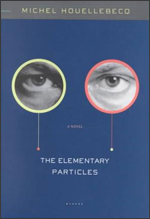
The Elementary Particles, Michel Houellebecq
Les Particules Élémentaires, Flammarion,
September 7, 1988 (France)
Alfred A. Knopf, 2000, (US), Translated by Frank Wynne
It was the best of times, it was the worst of times in this tale of two siblings, a study of two half-brothers (same mother, different fathers) who grow up in different environments. It is a tale of science versus sexuality, nature versus nurture, and the inability of love to conquer the atomized forces in either world.
Michel’s life in science provides a molecular view at how the deconstruction of events in one’s life—the elementary particles from which all other particles are born—lead a human being from point A to point B. His is a cold tale seemingly void of the nuances of human emotion, except for the subliminal guiding force of the historical concept of true love. Meanwhile, amour lives in the back seat in Bruno’s world, where the birth of free love in the late ’60s has caused a ripple in the typically stagnant ways of the universe, thereby altering the concept and constraints of love.
Metaphysical mutations—that is to say radical, global transformations in the values to which the majority subscribe—are rare in the history of humanity.
Bruno rides the wave of the universe’s sexual mutation straight into a black hole of obsession. For Bruno, there is “one source of warmth—between a woman’s thighs” and because of it, he dreams endlessly of “gaping vaginas.” Here, in the realm of all things physical, the course of one’s life can only be traced to the wounds inflicted by the trials and tribulations of animalistic, sexual desires. The resulting scars play a large role in the subsequent decisions of paths taken when life presents its many forks in the road.
The Elementary Particles is so dense with profound ideas that it can be a daunting task to try and narrow it down to just a few of the many that resonate the most. Michel Houellebecq is a philosopher wearing the cloak of a novelist and he uses words as darts, aiming directly at your own cork board of convictions. More often than not, he tosses bullseyes, ultimately forcing you to re-evaluate your place in the world as well as the events that conspired to put you there.
-G

|
|
 |



 PRINT
PRINT
 TWITTER
 FACEBOOK
 EMAIL
EMAIL MORE
MORE